Pages

Showing posts with label Kwazulu-Natal. Show all posts

05 April, 2012

Kwazulu-Natal - North Coast

Richards Bay
Posted Image Posted Image

The town boasts the country's largest harbour and some of its most magnificent wetland scenery. "Industrial Tourism" is actively promoted and groups are able to visit industrial plants, mines and other operations.

Posted Image Posted Image
Hippos in the sea.
This is very close to St Lucia which is a nature preserve and adjoins the Kruger National Park.
Posted Image
I have never been here personally (on my to do list) but I am told it is like Miami Florida. Seems possible from the pics I have seen of Miami.

Industry
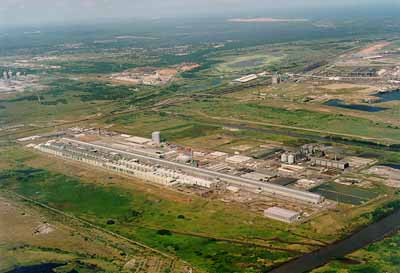
Alusaf is part of the Billiton group producing aluminium. Also big there is Richards Bay Minerals who do dredging and extract minerals from the sea sands. It is, as I mentioned in the Mpumalanga section, the main port for coal exports.
Posted Image Posted Image
Alusaf plant and coal export terminal

Stanger
Posted Image
From what I have heard, it is a popular deep sea fishing destination, not much in the way for the international tourist.

Sheffield Beach
Posted Image Posted Image
Posted Image

As you can see a little quieter and more rocky beaches. Not really conducive to swimming.

Ballito Bay
Posted Image Posted Image

Port Zimbali
Posted Image

Posted Image

Big Aerial Pic here (link)

Umhlanga Rocks
Umhlanga is a residential, commercial and resort town north of Durban on the coast of KwaZulu-Natal, South Africa. It is part of the eThekwini Metropolitan Municipality, created in 2000, which includes the greater Durban area. Commonly and erroneously pronounced Umshlanga (the correct pronunciation, of "hl" in Umhlanga is similar to the Welsh "ll"), the name means "place of reeds" in isiZulu.

Umhlanga, specifically the former sugar cane fields of Umhlanga Ridge, has become the focus of development in the greater Durban area with many businesses relocating offices from central Durban (similarly to Sandton forming the new centre of Johannesburg)(wiki)
Posted Image

Posted Image Posted Image
This is a real upmarket destination and plenty of time share and self catering apartments.

One of the trends in SA for the rich folk is to buy and build a vacation home in the more remote coastal towns and then rent out via time share or simple rentals keeping the best times of the year for themselves. You start talking at ZAR2M for a very small property about 600m2 and in Cape town, properties of this nature about ZAR7M+.

Political off topic
Although the government is predominantly black run, there still exists a dichotomy of the white folk actually running the economic side of the country with ownership of large companies still in the hands of whites.

Affirmative Action and Black Economic Empowerment (BEE) measures were introduced to counter this and what we have a token managerial positions in the private sector. This also led to BEE partnering companies that take a stake (for free) in the company so that you can get contracts with the bigger conglomerates where BEE is a prerequisite to be on their tender lists.

There are even independent agents now that try hook up businesses with these BEE "partners" FUCKING brilliant concept (if you are black) to get a stake out of some one else's hard earned capital w/o investing a cent or lifting your butt from your luxury office chair.

All this has done in reality is the cost of goods and services to these companies went up and in the end the taxman foots the bill via less tax by companies being paid as input costs increased.

This has led to a new neuveu rich black class and only a few astute black businesses actually have benefited. The masses are still the poor class here and their lot did not improve much.

One venture of a fully black owned banking institution failed and lasted less than a year. The same happened with a fully black owned mining company and it has gone bankrupt. Man the stories I could tell you of ineptitude would shock you.

The government introduced many minimum wage measures and in the farming community right of tenure laws. This means when a labourer is dismissed, he can now remain on the farm indefinitely if he has been there for say 7 years.

Farmers had little villages to house their workers and in the past and some had even supplied electricity and running water. The farmers would give extras to their pay like tobacco, maize meal, meat rations, a slaughter animal every so often and so they shared of the produce of the land essentially. They even had sections of land they could till themselves and plant crops and veggie gardens etc. all 100% subsidized by the farmer with seed and fertilizer.

So what farmers did was pay the minimum wage and the perks stopped and the black folk were in fact worse off. The folk had to find accommodation off the farm premises. The increased seasonal labour used to came from extended families and they all used to reside on the farms or come visit. Now the farmers hire for the harvest or planting from the local town. Probably as it is in the US, harvesting goes way into the night and not unusual to see harvesters still at it at 10pm. New laws meant overtime, the old system was a harvesting bonus, now only overtime is paid. The worker was screwed again by the govt. "fairness" laws

This has led to a huge influx into the towns of black folk and the traditional townships just exploded. The government built RDP (Reconstruction and Development Program) houses for them and is about the only good thing that came out of the govt. Of course, the huge imbalance in the population and job availability led to increased petty crime rates. The workers now have to commute to the farms.

In the original set up, a farm worker retired and stayed on in the village till he died. They were not put out to pasture and still contributed in menial tasks like say tending the farmers garden and mowing the lawn. Some big farmers built schools and funded the purchase of books etc. There was this win-win and there was peaceful coexistence. Somehow these folk were indoctrinated and told they were being taken advantage of and a shit storm erupted. They were duped and ended up worse off as the charity stopped when the new laws were mandated.

Certain farms were reclaimed by the government also in a redistribution drive and given back to the descendant of the alleged original owners of the lands. The white farmers were fortunately paid out for their farms.

To show you the result of what happened, read this blog article of one of my ex Rhodie friends. Here is one before/after pic of a once very productive farm. This is as recent as 2007.


All it took was 4 years….
These are pictures of a sugar/citrus/banana farm right next to Ngwenya Lodge in Komatipoort, South Africa.
Posted Image
This is not a scorched earth policy. The house was left intact and they stripped the building of all windows, roof sheeting etc. leaving just the shell of the building

Posted Image
The farm neglected and unproductive

You see this all over the country. A functional and habitable abandoned farm house will be stripped of all windows and roof sheeting within 6 months (stolen) and then you see tin shanties going up. Seems they like to live in squalor. The Govt. should have simply "bought back" the land from the "traditional forefather" claimant IOW given him cash. At least then the farm would have remained productive.

There is of course a superstition. Say someone dies in a village setting and there is a very functional thatched roof hut (some build really cool huts) no one will occupy the hut and they will burn the thatch roof off leaving the shell. Perhaps it is so that the soul can ascend to the heavens, no black man has been able to explain to me why they do this. It stands to reason, many farmers have died within those houses as these are 3-4th generation dwellings in some cases. It is an African cultural thing I cannot grasp and it seems a common trend/superstition in southern Africa.

Blacks only do subsistence farming. This is essentially the same thing that happened in Zimbabwe except there, the farmers were harassed off their land and the Mugabe cadres arrived in Jeeps and armed to the teeth with AK47s and put them off the lands. These farms have not been productive since. This scenario has played out all over post independent Africa. When the white man left, the land returned to fallow/nature. Some of these farms were left with implements like tractors too. The new owners simply sold or abandoned them to rust.

These cadres (aka war veterans) were not even alive in the Rhodesian war and are really no more than a band of Govt.. sponsored thugs. They are all in their 20's and 30's. The war ended in 1979. Do the math.

We see a similar trend here in SA where the ANC youth league are all about nationalisation and "taking back the farms" rhetoric. The Govt.. have seen the error of their ways (one hopes) and this redistribution has pretty much petered out. Over 3000 white farmers have been killed since 1994 and we are talking of women and children being butchered mostly in their sleep. All they take are weapons and the farmer's truck and car.

This is the side of the political story that does not make the press in the USA, the blacks are liberated, the "evil whites" pushed out and then it falls off the news radar screen. The sad thing is that the blacks have not aspired to roles of leadership in actually taking ownership and planning and running a farm. There would be less to bitch about if this actually happened but it does not.

Some African leaders have come to their senses and have realised, white farmers actually create jobs and till the lands and make the productive. Zambia has given grants and subsidies to these displaced farmers and many SA and ex Zimbabwe farmers have gone there. They also have the first ever white VP (Colonial rule had Brit appointed Governors not presidents). Result, the agricultural industry there is booming again. Less maize imports, more internal revenue win-win. Nationalisation of white farms was an epic failure under Kaunda.

My BIL and my wife sister's husband are both farmers so what I share I know first hand and not hearsay.

This is what happens when government tries to redress what they think are disparities and by doing so have done more harm than good. That old natural evolution just cannot be accelerated no matter how hard you try.

There are of course exceptions to the rule. There are some successful black farmers but these usually worked alongside with the other white farmers to get going and now are autonomous in their own right. The farming community tend to help each other out with assistance (for money, a cut in the harvest) in harvesting, planting etc. These machines are not cheap and of course they are not "point and shoot" machines, they are complex and training is required to operate them.

Nothing breaks a farmer's heart more than seeing adjacent fallow farms that should have crops on them. It is a love of the land more than a vocation.

The store front window of Africa is pretty, it is the back yard you don't see that is a mess. Political ideologies only work in theory, never in practice.

Much of what the early settlers did here is no different to what the white man did in the US with their NDN reservations. Same shit, different names, different continent.

Sorry for these rants but it is an emotional thing for me and many white folk here. I have lived here all my life and have nowhere to flee to not that it matters as I love this fucked up continent and all its people.

I have no political leanings as all the politicians, white and black alike, are a bunch of fucktards distanced and isolated from reality in their ivory towers of ideology.

Kwazulu-Natal - Road to Durban

Posted Image   Posted Image
This is the famous east coast and is geared up for the tourist. Worst time to visit Durban is December as all the Local tourista from Gauteng come here. In the "good old days" beaches were segregated and the famous South beach was for whites only, That is gone now and that beach becomes a mass of humans and is not a pleasure to go there.

The word Natal is Christmas in Portuguese. Natal was the called the last British outpost of South Africa and the language here is all mostly English. Kwazulu was the then tribal self autonomous black state and merged with Natal after independence in '94. Everyone simply calls it KZN now.

Many battles from the Boer war were fought in this province. Durban is the port of choice for goods destined for Gauteng (Johannesburg). Richards bay is an export terminus and all the other towns dotted along the coast are geared to the tourist.

Lets start inland and look at the topography. You will notice many names similar to the UK here.

Newcastle

Posted Image Posted Image
City Hall and Art Gallery

Not much to see here in the town but just a tad north is Volksrust which is still in my province Mpumalanga. Between these two towns is Majuba hill and a site for one of the biggest battles of the First Anglo-Boer war (they made a movie about it - see we can also boast of how we kicked the Brits butts)
Posted Image

Majuba Hill
Posted Image
Posted Image
Posted Image

The battle is thought to have been the first guerilla warfare tactic. As you know the Brits back then wore bright red with white cross bands saying "shoot me here" The Boers mostly in Khakis were able to skirmish and hide in the undergrowth and pick the Brits off at long range. We won this battle.

One of the newer power stations called Majuba, is situated here. This was a huge cluster-fuck par extraordinaire. They drilled for coal and found ample supply and we build the power stations on the coalfields. Construction was well under way when they discovered the coal seam stopped and dropped 300m. No problems, they dropped a new shaft but when they got to the coal, they could not pump out the water fast enough. This is a legacy to shit happens.

They closed the mine and now at great expense, coal is now ferried in by rail and road to make this thing work. By the time this was discovered, construction had begun on Unit 3 and Unit 1 was nearly ready for commissioning. The way contracts were awarded, commitments are made for 3 units at a time as the whole construction process takes 14-15 years from inception to commissioning the 6th unit and final hand-over.

This station is one of three that use dry cooling techniques (half of it anyway) and traditional wet cooling for the other half. I think this was a change in design as there was a huge delay for the last 3 units hence the dry cooling for the last three units.
Posted Image

Majuba Power Station
Ladysmith

Posted Image Posted Image
These places all have a rich history regarding the Anglo-Boer war.

Sadly this place now is off the beaten track as folk use a toll road via the Free State to return to Gauteng from Durban. Durban is approx a 6 hour drive from where I live. You may have noticed here we measure distance in time. It was a weird concept to get used to when I arrived here. Toll roads make it shorter but of course you pay for that privilege. KZN have the worst speed cops and you just do not speed here. If you are caught, you are arrested after a certain limit and appear the next day in court. They are zero tolerance to speeding and DUI and they still have cameras for the not so fast speeders. Speed limit is 120km/h(70mph) on most freeways and 100km/h(60mph) on the secondary roads. Suburban limits are between 40km/h to 60km/h

Mooi River(Pretty River)
Posted Image

My sister and BIL used to farm in this region and is in the outskirts of the Drakensberg mountain range. Here we have the highest peaks in the land.
Posted Image

A few of my own pics here

Posted Image  Posted ImagePosted Image
        Farm lake at sunset
Sadly they discontinued one our most popular beers but here we stopped and gave the horses a drink which got us the laugh.

Howick
Posted Image
Midmar Dam.

Each year, the Midmar Mile swimming race is held there, which organizers call "the world's largest open water swimming event". Over 20,000 entries were received for the 2009 event. There is also a falls but not that impressive

Posted Image

The whole area has Brit names from home towns in Scotland and England of the early Brit settlers. The topography is similar and is a beautiful province. Most folk miss this as they are in a hurry to get to the sea side. The area is very similar to the Scottish highlands and even parts I saw in Aberdeen area of Scotland. The weather here is just better.

Pietermaritzburg (wiki link)

The next town on our way to the coast is Pietermaritzburg (pics) (burg or berg means mountain BTW) and this is the capital of KZN. It is ~90km inland.
Posted Image

Posted Image

One thing one notices of KZN the closer you get to the coast, the Indian population is more visible as they are big in numbers here. (Note Indians is anyone with origins from the Indian subcontinent)

If you are white they may call you "boss" when trying to barter with you, something that has stuck in their culture here from the old days, they are not intimidated by whites, just a thing.

The architecture here is very 19th century and some lovely buildings. Pietermaritzberg is not the biggest city but the climate better than at the coast, esp. in summer.
Posted Image

Every year in June there is a super marathon called the comrades between Durban and Pietermaritzberg. The race is on a par with all the super marathons around the world. The whole event is televised live and it is a nice mid year time out that most folk participate in even if it is just in front of the TV. The start is in the dark and ends in the dark for the last stragglers. If you are a serious jogger, having just completed this marathon and a medal is a great achievement.

Pietermaritzberg culture here is very similar to that of my home town. Quite a few of our folk came here to study further to get degrees. In the first pic you will notice Jacaranda trees and the place from a Bulawayo perspective, very familiar.
Posted Image
Mahatma Gandhi

Pietermaritzburg is also famous for an incident early in the life of Mahatma Gandhi. In May 1893, while Gandhi was on his way to Pretoria, a white man objected to Gandhi's presence in a first-class carriage, and he was ordered to move to the van compartment at the end of the train. (wiki)

Pietermaritzberg is also home to the SANBI Botanical gardens

Posted Image

The trip from Pietermaritzberg to Durban becomes interesting as you clearly see a change in the botany, the tropical plants become more prevalent. Banana trees are everywhere, and you pass through a number of sugar plantations.

This trip passes through an area called the valley of a thousand hills (pics)
Posted Image
You have to get off the highway to see the good stuff (which I have yet to do) and see more of the traditional Zulu tribal culture in real life.

The Zulu people and whites have generally gotten on well over the centuries as they were a warring nation and gave as good as they got. The Great Zulu War took place in this region too. Legend has it that Impes (Zulu warriors) that displayed cowardice in the face of battle were taken to a cliff, thrown off and became food tor the crocodiles down below. Going off memory here but the Brits had not encountered such resistance before esp from the natives. This was a kingdom before the whites arrived and the Matabele who we had in Rhodesia's South west regions came from here. (this was history I learned at junior school of course with Brit bias) The Zulu culture is very strong and societal norms established in kingdom times still remain in place today albeit westernised.

The Xhosa (Nelson Mandela's origins) and Zulus were arch enemies and lived next door to each other. Still to this day there is this tension between them but despite this, in the days of pre-independence, the then leader of the Kwazulu homeland Mangosuthu Buthelezi (wiki article) petitioned the white government for the release of Nelson Mandela and the incorporation of the black states to the whole of South Africa.

Posted Image
He was the first VP to Mandela (FW de Klerk was 2nd VP). A lot of whites were hoping he would become president for fears of retribution from Mandela that never transpired (xian woo scare). He acted as President 22 times in his VP tenure.

On to Durban (pics)
Posted Image
Durban waterfront and the harbour in the background.

This is the busiest port in SA being closest to the Gauteng province. It is geared up for the international tourist and is great all year round. You can swim in winter as the Indian Ocean is on average 18-22 Deg C. It is one of the surfing capitals and many competitions are held here bringing in surfers from all over the world. SA is opposite to the US as far as oceans go. Our east coast is the popular and warmer sea.

It is probably no different to any coastal city elsewhere and you get the aquariums, live dolphin shows, great night-life for the city orientated person. The places up and down the coast are more popular with the country folk as it is less populated. The beaches here are really nice and human friendly. There is no sudden drop off. At low tide you can walk out pretty far before you have to tread water. I have only done body and board surfing and the waves are pretty big.

Many of the buildings you see are self catering apartments and probably many are now time share.

The free way up and down the coast follows the sea side for the most part and you have a view of the ocean for most of the time. It is a toll road now and not too cheap either.

Posted Image Posted Image

The sea is perfect for scuba diving and there are plenty of dive masters that will take you to the best dive sites. Snorkelling is also popular. A ride in a Zulu Rickshaw "taxi" is fun. These pullers navigate throughout the city. These colourful characters are famous for their giant, vibrant hats and costumes. They have a whole choreography of chants and jumps and moves so for kiddies, the experience may be terrifying.

Durban Sea World Aquarium

Posted Image

This is the biggest we have here. I have not seen the revamped one but my daughter has.
Posted Image Posted Image

You can even get to swim with the fish and view a typical water world show.

Out of sight in the southern areas, are the many fuel refineries and a huge industrial area. One aspect of Durban is that salaries here are (or were) comparatively lower than inland which is ironic as in the holiday seasons, everything goes up in price and the locals get no residence discount.

Remember I said stay away in December holidays? This is why.
Posted Image
Over crowded beaches and no frigging way I want to be a lifeguard in this situation. Every year we hear of black kids being abandoned/lost and drownings. You have to swim between beacons set up by the life guards but this is just fucking ridiculous. The only way to keep them in the shallows is by rubber duck as in the pic. 
Most are just day visitors from Gauteng, they really do not contribute to the tourist economy. These are not your typical black citizen, these are rabble rousers and fuck up everything that is orderly.

Ask any Durbanite businessman. All used to enjoy the peak in sales and the only folk making an extra buck from this lot now are the bottle stores. They do not behave this way anywhere else in SA even at the predominantly black soccer stadiums, difference is you have to pay to watch a match live. You guys have girls/teens gone wild, we have blacks gone wild here. It makes the evening news every year.

The Durbanites said December was spring tide (it is not) the Afrikaans speaking folk are affectionately referred to as rocks from the derogatory name rock-spiders and hence you just see rocks in the sea. Now it is referred to as the black tide. This is one of the reasons folk go north up the coast and south to quieter beaches and destinations and day trip into Durban for the festivities.

Easter is another time the beaches look like this. The rest of the year, like the aerial shot earlier.

Bear in mind, most black folk here generally cannot swim. Am I being racist? Who are the Olympic gold medallists in swimming? Very few black folk in that line up and certainly no black south Africans. Plus these dudes are wasted mostly and listen to no one. Perhaps it is an in your face retaliation from the apartheid days when they were not allowed into the white sanctuaries. This is 17 years since apartheid was abolished. I think the life guards (black and white) draw straws for xmas duties.

What it generally looks like and how it was (more or less in peak season)
Posted Image
Crowded and orderly and you see all races together and behaving this way in off season times.

Yeah it is a sore point here. The clean up of the beach after xmas and NY day is a mammoth task, they leave beer bottles all over and the beach has to cleaned up with machines to get rid of broken glass etc. (alcohol is not permitted on the beach but they don't give a shit for rules)

The beaches are probably closed the day after. Any form of making folk pay to go on the beach is seen with racist overtones of discrimination. Not really practical as you would have to fence off the beaches. Now we live with this "problem"

When I show you my pics from Ghana, you will see that they do not even have lifeguards posted and there are no blacks in the sea. On one trip I asked my host to take me to the beach and he like had this look of "WTF do you want to see there?"

When we get to the Western Cape we have the Cape Coloureds and these folk for whatever reason all tend to have their front teeth missing, almost like a right of passage to adulthood.

With that I share this SA joke (told by one black comedian)

A black guy and a cape coloured guy are watching a a National Geographic documentary about great white sharks.

The coloured guys says, "Hey bro, it is not fair, everything is great white this and great white that, how about a great coloured shark?"

"Naah, bro", says the black guy, "A shark with no teeth won't work, you need a great black shark"

"Well a shark without teeth is better than a shark that cannot swim..." he replied.

Next up the tour up and down the coast.

About Me

My photo
Kriel, MP, South Africa
I hail from South Africa and my name is Bernie.